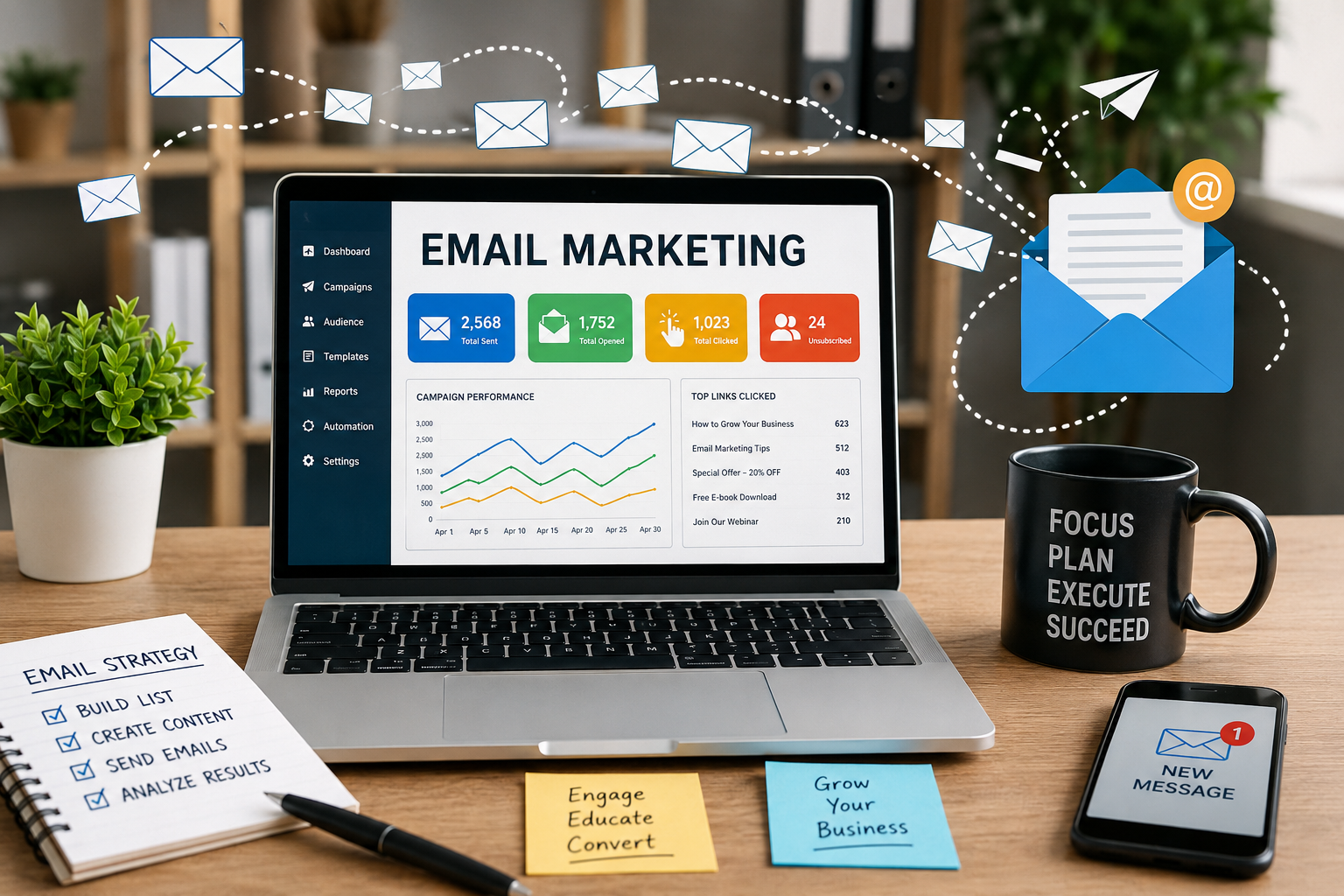
Bulk Email Marketing: The Complete Beginner’s Guide for Small Businesses (2026)
SEO Title
Bulk Email Marketing: Complete Beginner Guide for Small Businesses in 2026
Meta Description
Learn everything about bulk email marketing for small businesses. Discover how to build an email list, create campaigns, avoid spam filters, improve open rates, and generate more sales with email marketing.
Focus Keyword
Bulk Email Marketing
Secondary Keywords
- Email Marketing for Small Businesses
- Beginner Email Marketing Guide
- Bulk Email Campaigns
- Email Marketing Strategy
- Small Business Marketing
- Email List Building
- Email Automation
- Email Marketing Tips
Introduction
Email marketing remains one of the most powerful and cost-effective digital marketing channels available to small businesses today. Despite the growth of social media platforms, mobile applications, and messaging tools, email continues to deliver one of the highest returns on investment among all marketing methods.
For small business owners with limited budgets, bulk email marketing offers a practical way to communicate with customers, build trust, increase brand awareness, and drive consistent sales. Whether you run an online store, local service business, consulting company, restaurant, educational platform, or startup, email marketing can help you grow your audience and strengthen customer relationships.
Many beginners believe bulk email marketing simply means sending the same message to thousands of people. In reality, successful email marketing involves strategy, audience segmentation, personalization, automation, testing, and performance analysis.
This comprehensive beginner guide will explain everything you need to know about bulk email marketing, from building your first email list to launching successful campaigns that generate measurable business results.
What Is Bulk Email Marketing?
Bulk email marketing is the process of sending a single email message or campaign to a large group of subscribers simultaneously.
Businesses use bulk email marketing for various purposes, including:
- Product promotions
- Special offers
- Newsletter updates
- Event announcements
- Customer retention campaigns
- Educational content
- Seasonal marketing campaigns
- Brand awareness
Unlike one-to-one communication, bulk email marketing allows businesses to reach hundreds, thousands, or even millions of recipients efficiently.
However, successful bulk email marketing is not about sending emails to random people. It focuses on communicating with individuals who have voluntarily subscribed to receive information from your business.
Why Bulk Email Marketing Matters for Small Businesses
Small businesses often face challenges such as:
- Limited advertising budgets
- Strong competition
- Low brand awareness
- Customer acquisition costs
- Limited marketing resources
Email marketing helps solve many of these problems.
1. High Return on Investment
Email marketing consistently delivers one of the highest ROI rates among digital marketing channels.
A well-planned email campaign can generate sales with minimal costs compared to paid advertising.
2. Direct Communication
Social media platforms control visibility through algorithms.
Email allows businesses to communicate directly with subscribers without relying on third-party platforms.
3. Customer Retention
Acquiring new customers is often more expensive than retaining existing ones.
Email marketing helps businesses stay connected with customers and encourage repeat purchases.
4. Brand Authority
Regular educational emails position your business as an industry expert.
Customers are more likely to purchase from brands they trust.
5. Scalable Marketing
Whether you have 100 subscribers or 100,000, email marketing platforms make it easy to scale communication efforts.
How Bulk Email Marketing Works
A successful email marketing process generally follows these steps:
- Collect subscriber emails
- Organize subscriber data
- Create valuable content
- Design email campaigns
- Send emails through an email service provider
- Analyze campaign performance
- Optimize future campaigns
Every stage contributes to long-term success.
Benefits of Bulk Email Marketing
Increased Sales
Promotional emails encourage customers to purchase products and services.
Businesses frequently use:
- Flash sales
- Limited-time offers
- Product launches
- Exclusive discounts
to drive revenue.
Improved Customer Relationships
Consistent communication builds familiarity and trust.
Customers appreciate receiving useful information that solves problems.
Better Audience Understanding
Email analytics provide insights into:
- Open rates
- Click rates
- Subscriber interests
- Purchase behavior
These metrics help businesses improve future campaigns.
Affordable Marketing Solution
Compared to traditional advertising, email marketing requires significantly less investment.
This makes it ideal for startups and small businesses.
Building an Email List from Scratch
One of the most important aspects of email marketing is list building.
Without subscribers, there is nobody to send campaigns to.
Create Lead Magnets
A lead magnet is something valuable offered in exchange for an email address.
Examples include:
- Free eBooks
- Checklists
- Templates
- Guides
- Free consultations
- Discount coupons
Add Website Signup Forms
Place subscription forms on:
- Homepage
- Blog posts
- Sidebar
- Footer
- Landing pages
Keep forms simple and easy to complete.
Use Pop-Ups Strategically
Exit-intent popups can help capture visitors before they leave your website.
Offer value rather than simply asking for an email address.
Social Media Promotion
Promote your newsletter through:
- X
Encourage followers to join your email community.
Choosing the Right Email Marketing Platform
Several platforms support bulk email marketing.
Popular options include:
- Mailchimp
- Brevo
- MailerLite
- ConvertKit
- ActiveCampaign
- GetResponse
When selecting a platform, consider:
- Pricing
- Automation features
- Deliverability
- Ease of use
- Analytics
- Customer support
Beginners often start with free plans before upgrading.
Understanding Email Deliverability
Email deliverability refers to the ability of emails to reach inboxes instead of spam folders.
Many beginners overlook this critical factor.
Factors Affecting Deliverability
Domain Authentication
Set up:
- SPF
- DKIM
- DMARC
These records verify sender legitimacy.
Avoid Purchased Lists
Never buy email lists.
Purchased contacts often generate spam complaints and damage sender reputation.
Maintain List Hygiene
Remove:
- Invalid addresses
- Inactive subscribers
- Spam traps
Regular cleaning improves deliverability.
Use Permission-Based Marketing
Always obtain consent before sending marketing emails.
Creating Effective Email Campaigns
A successful email campaign contains several key elements.
Compelling Subject Line
The subject line determines whether recipients open the email.
Examples:
- Save 30% This Weekend Only
- Your Free Marketing Guide Is Ready
- Exclusive Offer for Subscribers
Keep subject lines concise and relevant.
Strong Preheader Text
Preheader text supports the subject line.
Use it to encourage opens and increase curiosity.
Personalized Greeting
Emails that include subscriber names often feel more engaging.
Example:
Hello Sarah,
instead of
Dear Customer,
Valuable Content
Focus on helping readers solve problems.
Provide:
- Tips
- Tutorials
- Insights
- Recommendations
- Solutions
before promoting products.
Clear Call-to-Action
Every email should have one primary goal.
Examples:
- Shop Now
- Download Guide
- Book Consultation
- Read More
- Claim Discount
Avoid confusing readers with multiple competing actions.
Email Marketing Metrics Every Beginner Must Track
Success depends on measurement.
Monitor:
Open Rate
Measures how many recipients opened the email.
Click-Through Rate
Measures link engagement.
Conversion Rate
Tracks desired actions such as purchases or signups.
Bounce Rate
Shows delivery failures.
Unsubscribe Rate
Indicates audience dissatisfaction.
Regular analysis helps improve campaign effectiveness.
Common Bulk Email Marketing Mistakes
Many beginners make avoidable mistakes.
These include:
- Buying email lists
- Sending too many emails
- Ignoring mobile optimization
- Using misleading subject lines
- Not testing campaigns
- Poor segmentation
- Weak calls-to-action
Avoiding these mistakes significantly improves results.
Understanding Email Marketing Funnels
One of the biggest advantages of bulk email marketing is the ability to guide potential customers through a structured sales process known as an email funnel.
An email funnel is a sequence of emails designed to move subscribers from awareness to purchase.
Most successful email funnels contain the following stages:
Stage 1: Awareness
At this stage, subscribers are just learning about your business.
The goal is not to sell immediately.
Instead, focus on:
- Introducing your brand
- Sharing useful content
- Solving common problems
- Building trust
Example emails:
- Welcome emails
- Educational blog updates
- Industry tips
- Free resource delivery
Stage 2: Interest
Subscribers begin exploring your products or services.
Your goal becomes demonstrating expertise and value.
Examples include:
- Product tutorials
- Success stories
- Case studies
- Customer reviews
Stage 3: Consideration
Potential customers compare options before making a decision.
Provide information that helps them choose your business.
Useful content includes:
- Frequently asked questions
- Product comparisons
- Detailed benefits
- Feature explanations
Stage 4: Conversion
This stage encourages subscribers to take action.
Examples:
- Purchase products
- Book appointments
- Request consultations
- Start free trials
Effective conversion emails often contain:
- Limited-time offers
- Bonuses
- Discounts
- Strong calls-to-action
Stage 5: Retention
Many businesses stop communicating after a sale.
This is a major mistake.
Retaining customers often costs less than acquiring new ones.
Retention emails may include:
- Thank-you messages
- Loyalty rewards
- Product usage tips
- Special customer-only offers
Email List Segmentation Explained
Segmentation is the process of dividing subscribers into smaller groups based on specific characteristics.
Instead of sending the same message to everyone, you send targeted messages to relevant groups.
This significantly improves engagement and conversion rates.
Why Segmentation Matters
People have different interests, needs, and purchasing behaviors.
A customer interested in website design services may not care about social media management.
Sending relevant content increases:
- Open rates
- Click rates
- Customer satisfaction
- Revenue
Types of Email Segmentation
Demographic Segmentation
Subscribers can be grouped by:
- Age
- Gender
- Occupation
- Income level
- Education
This allows businesses to create more personalized campaigns.
Geographic Segmentation
Location-based targeting can improve relevance.
Examples:
- Country
- State
- City
- Region
A local restaurant may promote offers only to nearby subscribers.
Behavioral Segmentation
This method uses subscriber actions.
Examples:
- Email opens
- Link clicks
- Product purchases
- Website visits
Behavioral segmentation is among the most effective strategies.
Customer Journey Segmentation
Different messages should be sent to:
- New subscribers
- Leads
- Customers
- Repeat buyers
- Inactive subscribers
Each group requires different communication.
Welcome Email Series
The welcome sequence is often the most important automation campaign.
New subscribers are highly engaged immediately after joining.
This creates an excellent opportunity to make a strong first impression.
Email 1: Welcome Message
Send immediately after signup.
Include:
- Thank you message
- Brand introduction
- Expectations
- Free resource delivery
Example:
“Thank you for joining our community. We’re excited to help you grow your business through practical marketing strategies.”
Email 2: Brand Story
Send after one or two days.
Share:
- Company background
- Mission
- Values
- Why your business exists
Stories create emotional connections.
Email 3: Educational Content
Provide useful information.
Examples:
- Tutorials
- Guides
- Checklists
- Industry insights
Focus on helping subscribers.
Email 4: Social Proof
Build credibility through:
- Testimonials
- Reviews
- Case studies
- Customer success stories
Trust often determines whether people buy.
Email 5: Offer Introduction
After establishing trust, present your product or service.
Explain:
- Benefits
- Results
- Unique advantages
Avoid aggressive selling.
Email Automation for Small Businesses
Email automation allows businesses to send emails automatically based on subscriber actions.
Automation saves time while increasing efficiency.
Once configured, campaigns run continuously.
Benefits of Email Automation
Time Savings
Businesses no longer need to manually send every email.
Automation handles repetitive communication.
Improved Consistency
Subscribers receive messages at the right time.
Consistency strengthens customer relationships.
Better Customer Experience
Automated emails are often more relevant than mass broadcasts.
This increases engagement.
Higher Revenue
Automated campaigns frequently outperform traditional email blasts because they are behavior-driven.
Essential Email Automation Campaigns
Welcome Automation
Triggered when someone subscribes.
Purpose:
- Introduce your brand
- Deliver promised resources
- Build trust
Abandoned Cart Emails
For eCommerce businesses.
Sent when shoppers leave items in their cart without purchasing.
These emails often recover lost sales.
Example sequence:
Email 1: Reminder
Email 2: Benefits
Email 3: Discount incentive
Post-Purchase Follow-Up
Triggered after a purchase.
Includes:
- Thank-you message
- Product instructions
- Upsell recommendations
- Review requests
Re-Engagement Campaign
Targets inactive subscribers.
Goal:
- Rebuild interest
- Increase engagement
- Clean inactive contacts
Creating High-Converting Email Content
Content quality determines campaign success.
Many businesses focus too heavily on promotion.
Instead, aim to educate and provide value.
The 80/20 Rule
A popular guideline suggests:
80% Value
20% Promotion
Value-based content includes:
- Tips
- Tutorials
- Guides
- Industry updates
- Problem-solving advice
Promotional content includes:
- Sales
- Discounts
- Product announcements
Subscribers stay engaged when they receive useful information consistently.
Writing Effective Email Subject Lines
Subject lines significantly influence open rates.
A weak subject line can reduce campaign performance even if the email content is excellent.
Characteristics of Strong Subject Lines
Short
Aim for fewer than 60 characters.
Examples:
- Boost Sales with This Simple Strategy
- Your Marketing Guide Is Ready
- New Customer Growth Tips
Relevant
Match the email content.
Misleading subject lines damage trust.
Curiosity Driven
Encourage subscribers to learn more.
Example:
“The One Marketing Mistake Most Businesses Make”
Benefit Focused
Highlight value.
Example:
“Learn How to Increase Sales Without More Ads”
Personalization Strategies
Modern email marketing goes beyond inserting first names.
Advanced personalization improves engagement.
Examples include:
- Product recommendations
- Location-based content
- Behavioral triggers
- Purchase history targeting
Personalized emails often outperform generic campaigns.
Email Design Best Practices
Email design impacts readability and conversions.
Good design enhances user experience.
Mobile Optimization
More than half of emails are opened on mobile devices.
Ensure emails:
- Load quickly
- Display properly
- Use readable fonts
- Have clickable buttons
Simple Layouts
Avoid clutter.
Focus on:
- Clear headlines
- White space
- Short paragraphs
- Visual hierarchy
Strong CTA Buttons
Call-to-action buttons should be obvious.
Examples:
- Download Now
- Get Started
- Claim Offer
- Learn More
A/B Testing for Better Results
A/B testing compares two versions of an email.
The goal is identifying which version performs better.
Elements to Test
Subject Lines
Compare:
Version A:
“Marketing Tips for Beginners”
Version B:
“5 Marketing Tips That Increase Sales”
CTA Buttons
Test different wording.
Examples:
- Buy Now
- Start Today
- Learn More
Send Times
Different audiences respond differently.
Experiment with:
- Morning
- Afternoon
- Evening
Email Length
Some audiences prefer short emails.
Others respond better to detailed content.
Testing reveals what works best.
Building Trust Through Email
Trust is the foundation of successful email marketing.
Without trust, subscribers ignore emails.
Be Transparent
Clearly explain:
- Who you are
- Why you’re emailing
- What subscribers can expect
Deliver Consistent Value
Helpful content builds authority.
Subscribers appreciate businesses that educate rather than constantly sell.
Keep Promises
If you promise weekly updates, send weekly updates.
Consistency improves credibility.
Respect Subscriber Privacy
Never share subscriber information.
Protect customer data at all times.
Measuring Email Marketing Success
Many beginners focus only on open rates.
Successful marketers track multiple metrics.
Open Rate
Measures email opens.
Useful for evaluating subject lines.
Click-Through Rate
Measures link engagement.
Shows content effectiveness.
Conversion Rate
Measures completed actions.
Examples:
- Purchases
- Registrations
- Downloads
Revenue Per Email
Tracks actual income generated by campaigns.
This is one of the most valuable metrics.
Subscriber Growth Rate
Measures list expansion over time.
Healthy growth indicates successful marketing efforts.
Common Beginner Challenges
Most new marketers experience obstacles.
Understanding these challenges helps avoid frustration.
Low Open Rates
Possible causes:
- Weak subject lines
- Poor deliverability
- Unengaged audience
High Unsubscribe Rates
Possible causes:
- Too many emails
- Irrelevant content
- Excessive promotions
Low Click Rates
Possible causes:
- Weak CTAs
- Poor design
- Lack of value
Spam Folder Placement
Possible causes:
- Purchased lists
- Excessive promotional language
- Missing authentication records
Future of Email Marketing
Email marketing continues evolving.
Emerging trends include:
- Artificial Intelligence
- Predictive analytics
- Dynamic content
- Advanced personalization
- Behavioral automation
Businesses that adapt to these innovations gain competitive advantages.
Conclusion
Bulk email marketing remains one of the most effective growth channels for small businesses. With the right strategy, even businesses with small budgets can attract subscribers, nurture leads, increase customer loyalty, and generate consistent revenue.
Success does not happen overnight. Building a high-quality email list, creating valuable content, improving deliverability, and continuously analyzing performance require patience and dedication.
Businesses that focus on providing value rather than simply selling products are more likely to build strong subscriber relationships and achieve long-term email marketing success.
This guide serves as the foundation for your email marketing journey. As you gain experience, you can explore advanced topics such as automation, segmentation, behavioral targeting, AI-powered personalization, and lifecycle marketing to maximize results.
Bulk email marketing becomes significantly more effective when combined with segmentation, automation, personalization, and strategic content creation. Instead of sending the same message to every subscriber, successful businesses deliver targeted communication that addresses individual needs and interests.
By implementing welcome sequences, automated campaigns, behavioral targeting, A/B testing, and customer-focused content strategies, small businesses can increase engagement, improve customer relationships, and generate sustainable revenue growth through email marketing.
The next section will cover advanced email marketing strategies, compliance requirements, GDPR and CAN-SPAM regulations, lead nurturing systems, customer lifecycle marketing, real-world case studies, and expert-level techniques for maximizing email marketing ROI.